

-
Certificates


Find certification bodies for your selected ISO standard
-
Most Popular ISO Certifications ★
-
Management and Quality
-
Environment and Sustainability
-
Occupational Health, Safety and Wellbeing
-
Information Security and IT
-
Compliance and Business Continuity
-
Artificial Intelligence and Innovation
-
Food Safety and Agriculture
-
Transport, Logistics and Rail
-
Automotive, Aerospace and Defence
-
Medical Devices and Healthcare
-
Construction and Industry
-
Cosmetics and GMP
-
Energy and Fuels
-
Professional Services
-
- How It Works
- Certification Guide
- PL
- EN

-
Certificates
Find certification bodies for your selected ISO standard
-
Most Popular ISO Certifications ★
-
Management and Quality
-
Environment and Sustainability
-
Occupational Health, Safety and Wellbeing
-
Information Security and IT
-
Compliance and Business Continuity
-
Artificial Intelligence and Innovation
-
Food Safety and Agriculture
-
Transport, Logistics and Rail
-
Automotive, Aerospace and Defence
-
Medical Devices and Healthcare
-
Construction and Industry
-
Cosmetics and GMP
-
Energy and Fuels
-
Professional Services
-
- How It Works
- Certification Guide
-
EN
Newsroom 27 Jan 2025
Energy Management Systems and Energy Audits – Requirements of Directive 2023/1791
Directive 2023/1791 requires companies with energy consumption over 85 TJ to implement ISO 50001 and those exceeding 10 TJ to conduct energy audits. Learn more and find certification bodies!
Directive (EU) 2023/1791 of the European Parliament and the Council introduces specific requirements for companies with high energy consumption to improve energy efficiency and promote sustainable energy use. Below is an overview of the key obligations.
Energy Management Systems
Companies with an average annual energy consumption over the past three years exceeding 85 TJ (approximately 23.61 GWh), including all energy carriers (e.g., gas, solid fuels, heat, electricity), are required to implement a certified energy management system.
The system must be certified by an independent body in accordance with relevant European or international standards, such as ISO 50001.
Deadline for implementation: October 11, 2027.
Energy Audits
Companies with an average annual energy consumption over the past three years exceeding 10 TJ (approximately 2.78 GWh), which have not implemented an energy management system, are required to conduct energy audits.
The first audit must be completed by October 11, 2026, with subsequent audits conducted at least every four years.
Audits must:
- Be conducted independently by qualified or accredited experts.
- Follow transparent and non-discriminatory criteria, aligned with European or international standards.
Outcome of audits:
- Companies must develop specific and actionable plans to implement recommendations where technically and economically feasible.
- These plans must be presented to the company’s management and included in annual reports, subject to confidentiality rules.
Additional Obligations
- Data Reporting: Countries may establish platforms to collect data on energy consumption and the implementation of audit recommendations.
- Integration with Environmental Audits: Energy audits can be part of broader environmental management systems (e.g., EMAS).
- Exemptions: Companies using certified environmental management systems (e.g., EMAS) that meet audit requirements may be exempt from standalone energy audits.
Benefits for Companies
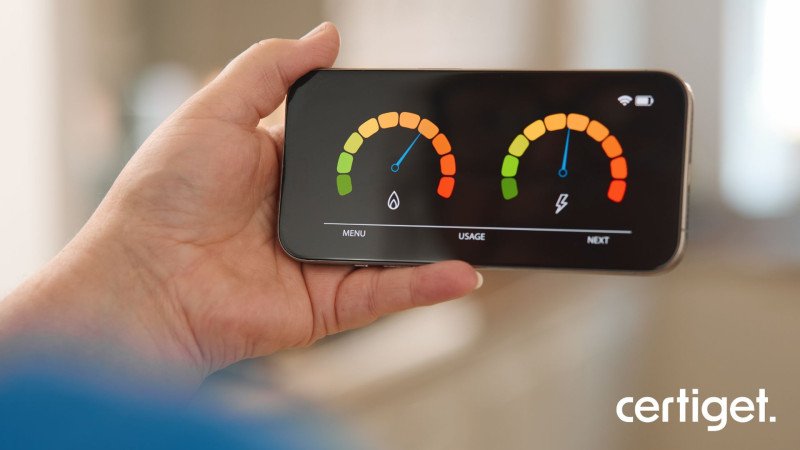
Implementing energy management systems and conducting energy audits not only fulfills regulatory requirements but also offers tangible benefits:
- Reduced operational costs through optimized energy use.
- Improved energy efficiency and lower carbon emissions.
- Enhanced market competitiveness with sustainable practices.
Explore the global directory of ISO certification bodies
🔍 Explore the global directory of ISO certification bodies – find organizations specializing in ISO 50001 certification and choose your partner on the path to compliance with Directive 2023/1791.
Discover ISO Certification Bodies
Article author

Piotr Feltynowski
Certification Analyst
Certiget
At Certiget, Piotr plays a key role in analyzing and comparing certification offers. He is responsible for preparing detailed comparative summaries that take into account various aspects of the offers. In his work, he utilizes analytical skills, precision, and knowledge of ISO standards and certification regulations.
Share this article


